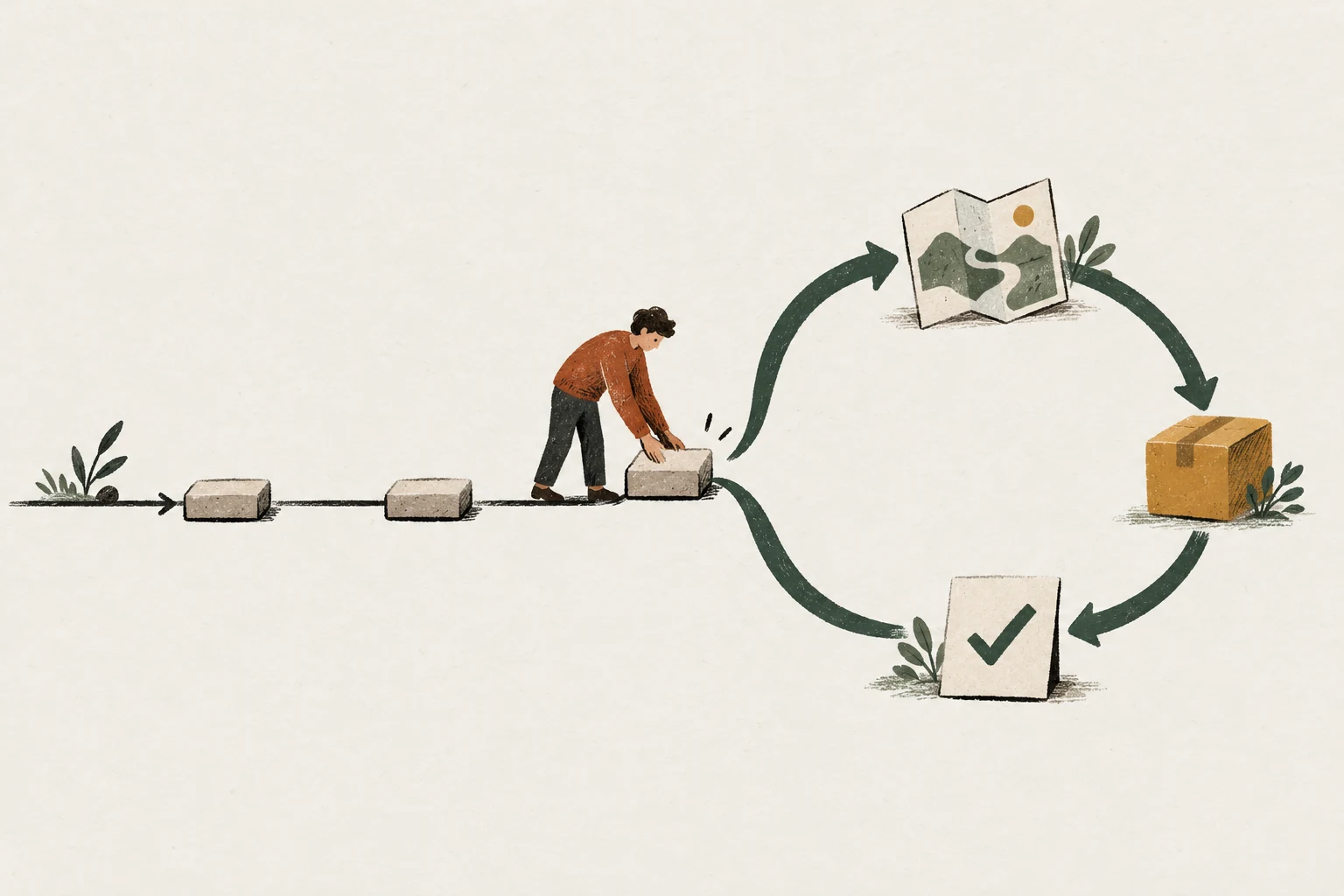
You ordered a birthday gift. The tracking page says “delayed.” The birthday is tomorrow. You ask the store: “Can you help me get this here in time?”
One product shows you a shipping update. Another could investigate, find a pickup option, ask for your approval, and confirm a reservation. The difference is who decides what happens next.
1. A path or a goal
A conventional workflow follows decision rules written by developers. An agentic workflow lets a model choose some of the next steps, using the customer's goal and the information it discovers.

Predefined workflow
The developer chooses the branches.
- Look up the order
- Check shipping status
- Apply the matching rule
If lateShow delay notice
If on timeShow tracking
Agentic workflow
The model chooses within allowed actions.
- Understand the deadline
- Check delivery options
- Adapt to what turns up
One routeOffer local pickup
Another routeAsk about a substitute
Traditional software can already branch, retry, and loop. What changes is that the model can interpret “in time” and decide which capability would help next. Developers still build the tools and define their limits. Anthropic describes this distinction between workflows and agents.
2. Inside the agent's loop
The agent checks the carrier: arrival is now two days away. It searches nearby stores instead. If the exact gift is unavailable, it asks whether another color would work. Each result informs the next step.
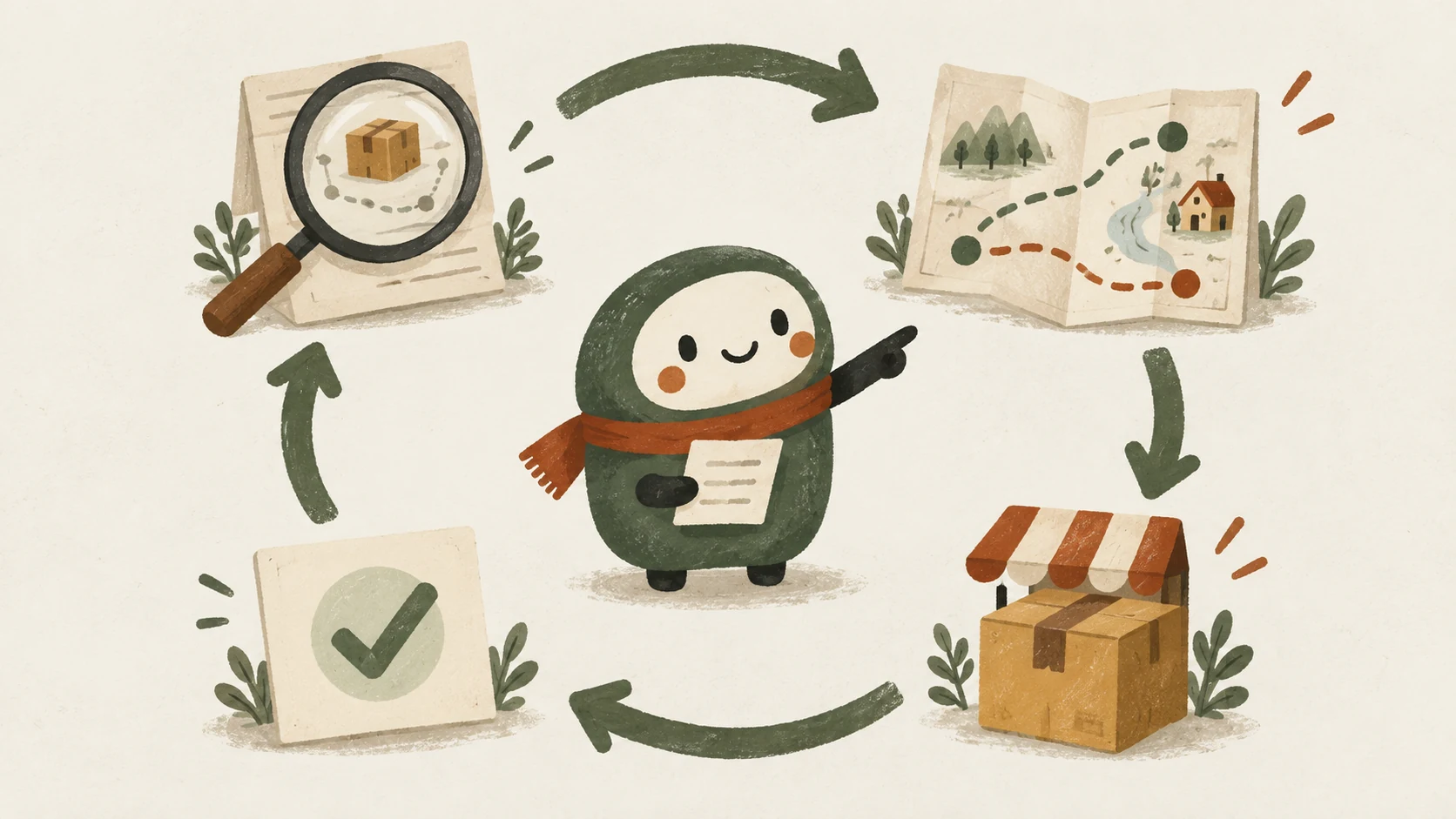
Goal A workable gift option before tomorrow afternoon.
- 01Observe“The shipment is late.”
- 02Choose“Check nearby stores.”
- 03ActCall the inventory tool.
- 04CheckIs a suitable gift available?
If more work is needed, feed the result back into Observe.
Probabilistic means learned probability patterns help shape the model's output. Different runs can take different routes; variation is possible, not required. The probability of a response is also different from the probability that an action will succeed.
The ReAct research paper explored this interleaving of reasoning and actions. Tool results give the model fresh evidence for the next decision.
“Probabilistic programming” also has an established statistical meaning: specifying probability models and performing inference. This post concerns probabilistic control flow in AI applications.
3. Freedom needs boundaries
The agent can suggest a replacement. The surrounding software must enforce whether that replacement is allowed. Putting a rule in a prompt does not guarantee it will be followed.

- ProposeAgent“Reserve this gift.”
- AuthorizeChecksCustomer consent + store policy.
- ExecuteServiceReserve only if stock remains.
- VerifyRecordRead the actual confirmation.
Code still checks account access and calculates prices. Services can fail or return changing information, so the product must inspect their responses. Model-guided decisions sit inside a system of enforceable permissions, reliable operations, and useful handoffs.
4. Agents can delegate a goal
The lead agent might ask a specialist: “Find pickup options before tomorrow afternoon, within the customer's travel distance.” The specialist can choose its own search steps and return findings with evidence.
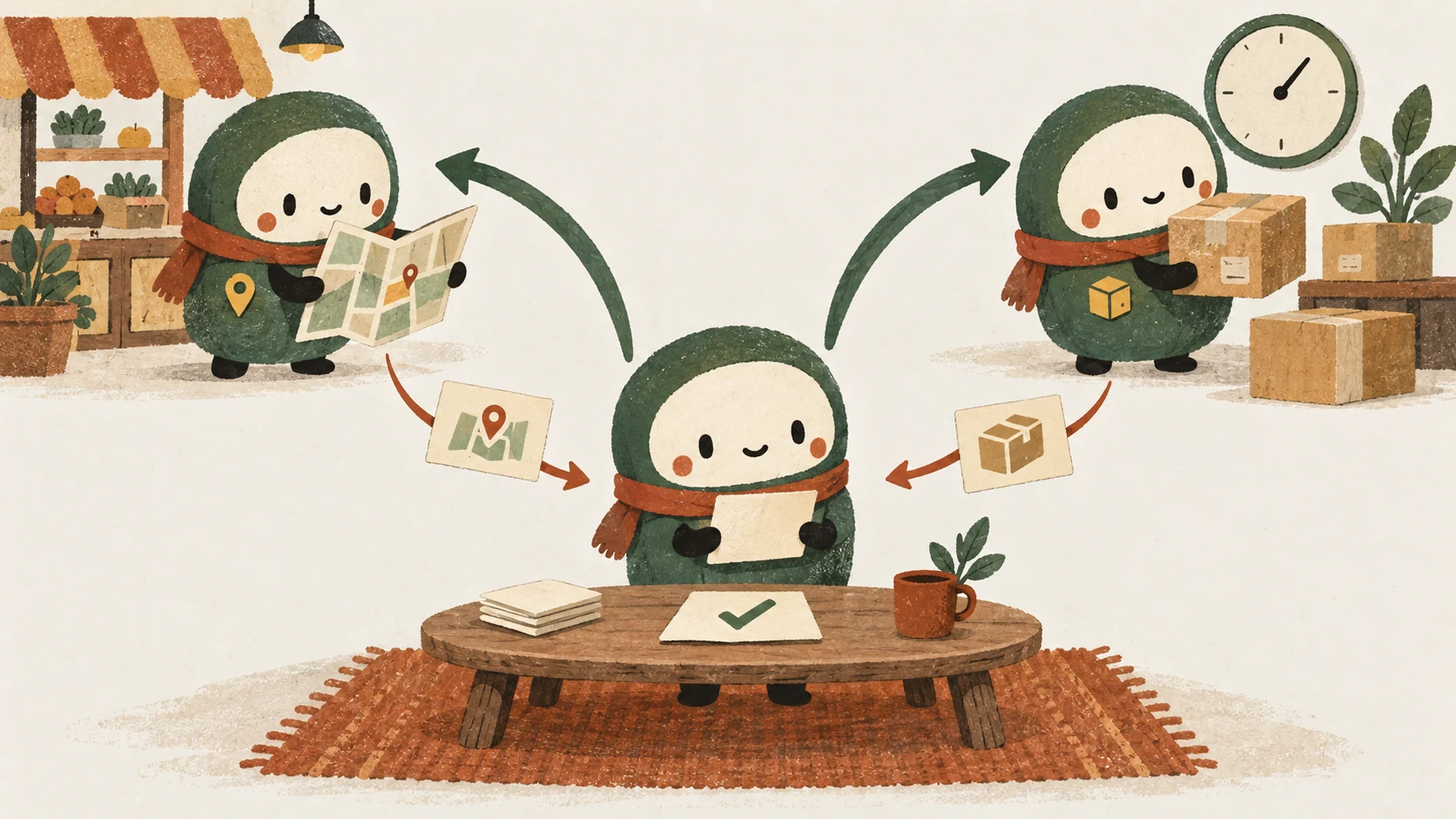
↓ Delegate a goal + context + constraints
Inventory agent
Check nearby pickup stock.
Returns: store, item, availability record.
Delivery agent
Check shipping alternatives.
Returns: options, estimates, carrier evidence.
↓ Return findings to the lead
In Anthropic's June 2025 account of Claude Research, a lead agent delegates research and combines specialist findings. More agents add cost and coordination work, so a simple lookup rarely needs a team.
5. Measure the result
One run might find a nearby store immediately. Another might check shipping first. Different paths can be valid, but each must satisfy the same requirements.
Test varied requests and repeated runs. Check actual records, unauthorized actions, cost, time, and escalation quality. A friendly answer alone does not establish success.
The route can adapt. The definition of a good result still needs to be clear.
Deterministic programming remains essential. The opportunity is to let software handle more of the work between a person's intention and a verified outcome. For the customer waiting on a gift, that means less navigating categories and more getting useful help.